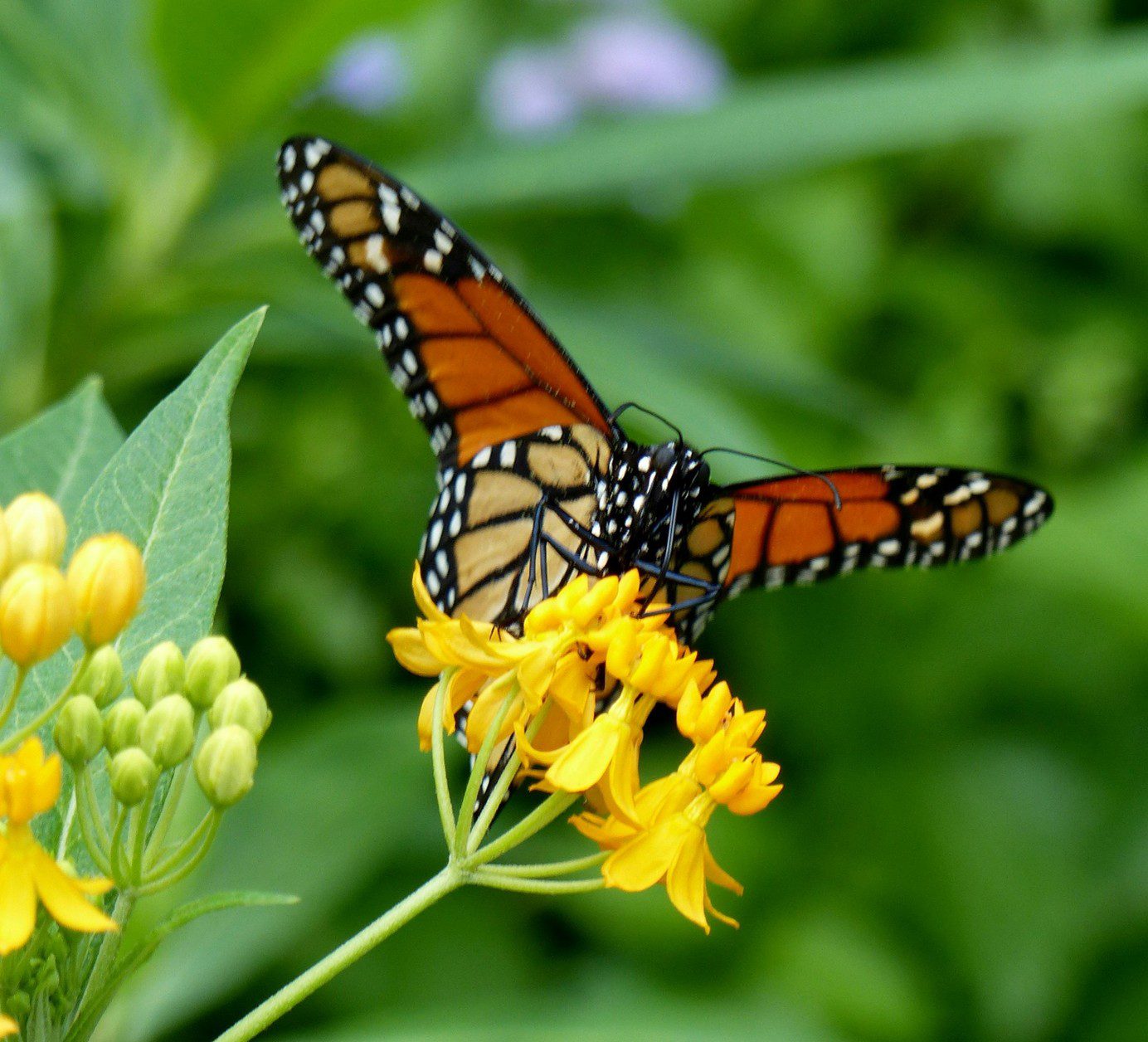
Did you know that various stretches of Iowa highway are being converted into pollinator corridors? A combination of farmers and everyday people turning the strips of land we all drive past every day into a working solution.
The monarch butterfly’s epic migration, a journey of up to 3,000 miles from Canada and the northern U.S. to central Mexico and back again, is a migration under real pressure. Mike Brescia explains that it’s not because of politics or ideology, but rather the roadside milkweed and nectar plants that monarchs depend on have been mowed over, plowed under, or paved entirely.
The Power of the Roadside
A lot of people don’t realize just how much land lies along our roads and highways. In the U.S. alone, state departments of transportation manage roughly 17 million acres of roadside lands. That’s more land than all the national parks in the lower 48 states combined.
What’s interesting is that this land can’t be used for farming or development, but it can be planted with native wildflowers, grasses, and milkweed – the only plant monarch caterpillars can eat. It’s low-cost, low-maintenance, and highly visible.
The I-35 Monarch Highway Project, which spans from Minnesota down through Texas, directly follows the monarch’s central flyway. I drove through a portion of it last summer, and sure enough, I saw signs along the highway: “Pollinator Habitat – Do Not Mow.” Not only were there stretches full of blooming coneflowers, milkweed, and goldenrod, but I actually saw monarchs fluttering across rest stops.
Farmers, DOT Crews, and Volunteers
The success of these corridors comes down to people getting their hands dirty, sometimes literally.
In Kansas, local farmers have partnered with highway crews and conservation groups to establish pocket habitats along the edges of working fields and fence rows. These aren’t 100-acre preserves – they’re simple patches of native plants that act as “stepping stones” for monarchs and other pollinators on their journey.
In Texas, where the monarchs stage their most critical spring return flight, community groups have taken to planting waystations, small patches of native flowers and milkweed at schools, churches, and civic buildings. I visited one outside Waco while traveling for work, and the local master gardeners proudly showed off how their roadside “rest stop” for butterflies had exploded with activity just months after planting.
These people aren’t doing it for attention. They’re doing it because it makes sense; and because the results speak for themselves.
A Win for Wildlife and Landowners
Let’s be clear: this isn’t about turning farmland into sanctuaries or cities into jungles. What makes this effort work is its scalability and practicality.
Mowing schedules are adjusted to avoid cutting during monarch breeding and migration seasons.
Native plant seed mixes are used in place of standard turf grasses that require more maintenance.
Volunteers and local groups are trained to plant and manage waystations.
Farmers and ranchers receive assistance or resources to create pollinator strips along fields, often improving soil and water health in the process.
And here’s the kicker: these changes often save money. Less mowing, fewer herbicide applications, and hardier plants that don’t require irrigation all add up.
Here in Upstate New York, we’ve got a ton of underutilized road edges, canal trails, powerline corridors, and even the shoulders along our rural highways that could be turned into monarch habitat. Some small towns are beginning to experiment, but it’s nowhere near the scale I’ve seen out West or in the Midwest.
This is doable, even at the town or county level. All it takes is:
- A change in mowing schedules
- A few seed packets of regionally appropriate milkweed and wildflowers
- A couple of volunteers with shovels
I’d love to see a pilot project along the Erie Canalway Trail or even portions of Route 20 – two routes that already run through plenty of suitable terrain and intersect natural flyways. With minimal cost and strong visual impact, it could be a great community initiative that yields measurable results.
Getting Involved
If you’re interested in getting involved, you don’t need to wait on permission from the top. Here are a few practical ways people have made a difference:
- Plant a backyard monarch waystation using native milkweed and nectar plants.
- Talk to your local highway department about low-mow or no-mow signage in strategic spots.
- Partner with local schools or 4-H clubs to create educational garden plots.
- Support roadside wildflower planting through town beautification or public works initiatives.
Action with Real Results
The monarch butterfly corridors are a prime example of restoration that works and works well. There’s no need for fanfare. Just seeds, sweat, and the willingness to try something simple that benefits the land and its creatures.
You don’t have to believe in biodiversity. You just have to be willing to look at what’s working and say, “Let’s do more of that.”
Let’s bring back the monarchs, one roadside at a time.