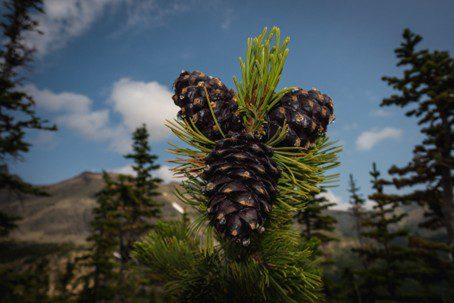
I first became aware of the plight of the whitebark pine when I was reading about its connection to grizzly bears. It turns out that the seeds of this rugged, high-altitude tree are a vital food source for bears, especially as they prepare for hibernation. However, I kept coming across reports of declining whitebark pine forests, with entire stands wiped out by disease and pests. That got me thinking—if this tree is so important to mountain ecosystems, what’s being done to save it?
As it turns out, quite a bit. All across the west, dedicated conservationists, forestry experts, and land managers are fighting to restore this rare species. Their work is boots-on-the-ground, focused on everything from breeding disease-resistant trees to manually planting new stands in areas where pines have been wiped out.
This is the kind of real-world conservation effort I love to see—practical, hands-on, and results-driven. And frankly, it’s the kind of project I’d love to see expanded to places like Upstate New York, where reforestation efforts could benefit from similar strategies.
The Mountainous West
Whitebark pine (Pinus albicaulis) is a tough, slow-growing tree that thrives at high elevations, often where few other trees can survive. You’ll find it in the Rocky Mountains, the Cascades, and parts of the Sierra Nevada, typically near the treeline where conditions are harsh.
So why does this tree matter so much?
The tree’s nutritious seeds are a critical food source for animals like grizzly bears, Clark’s nutcrackers, and red squirrels. In fact, the nutcracker—a clever bird—relies almost entirely on whitebark pine seeds, caching them throughout the mountains. Some of those caches grow into new trees, making the bird an accidental forester of the high country.
It also plays a huge role in stabilizing fragile mountain soils. Its roots hold loose rock and dirt together, reducing erosion and helping to control the flow of snowmelt into streams and rivers.
Unlike many other conifers, whitebark pine can survive in fire-prone landscapes. Its presence helps regenerate burned-out forests, providing a foundation for new growth after wildfires.
Unfortunately, despite its toughness, the whitebark pine is in serious trouble.
Threats
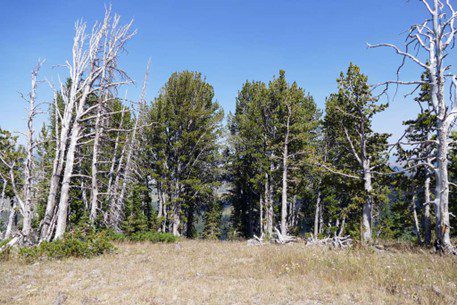
If you’ve spent any time hiking in the Mountain West, you’ve probably seen the telltale signs of the pine die-off—entire groves of ghostly, skeletal trees standing where lush forests once thrived. Several factors have contributed to this decline:
White Pine Blister Rust – This non-native fungal disease has devastated pine forests, infecting and killing trees at an alarming rate. It’s a slow but relentless killer, often taking years to fully strangle a tree’s ability to transport nutrients.
Mountain Pine Beetles – These tiny but destructive insects have become an even bigger problem in recent years. Warmer temperatures have allowed beetles to survive at higher elevations, where they previously struggled. Now, they’re tearing through forests that were once safe from infestation.
Fire Suppression – Decades of aggressive fire suppression policies have changed the natural fire cycle, allowing competing tree species to take over its habitat. Since whitebarks are slow growers, they struggle to reclaim lost ground once faster-growing species move in.
With so many threats stacked against them, it’s easy to see why conservation efforts have become so critical.
What’s Being Done?
Thankfully, foresters, biologists, and conservationists are not sitting idly by. Across the western U.S. and Canada, multiple restoration efforts are underway to preserve, protect, and replant.
Identifying and Breeding Disease-Resistant Trees
One of the most promising restoration strategies involves identifying naturally resistant trees and using them to grow stronger, disease-resistant seedlings.
Scientists have been searching for individual trees that have survived white pine blister rust, carefully selecting them for seed collection. Those seeds are then grown in controlled conditions, tested for disease resistance, and eventually planted in the wild to rebuild struggling forests.
The Whitebark Pine Ecosystem Foundation and the U.S. Forest Service are leading this charge, working with national parks and wilderness areas to reintroduce hardy new trees.
This is the kind of no-nonsense conservation work that actually moves the needle—identifying the strongest specimens and using them to rebuild what’s been lost.
Planting in High-Priority Areas
Because whitebark pine grows slowly and takes decades to reach maturity, restoration teams are actively planting seedlings in strategic locations.
In places like Yellowstone National Park, Glacier National Park, and the Greater Yellowstone Ecosystem, volunteers and scientists are hauling in young trees to replace dead stands. These efforts require careful planning—planting the right trees in the right places is essential to long-term success.
Many of these projects rely on partnerships between government agencies, private landowners, and conservation groups. There’s a reforestation effort in Idaho’s Sawtooth Mountains, where teams planted thousands of whitebark seedlings across burned-out areas. That’s exactly the kind of action we need more of.
Controlled Burning to Restore Habitat
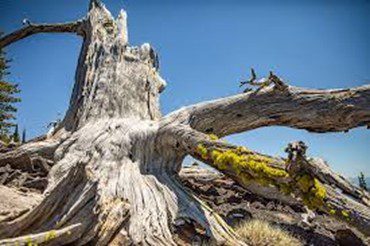
Since fire is a natural part of the ecosystem, some restoration teams are using controlled burns to clear out competing tree species and create space for whitebarks to regenerate.
Fire opens up the landscape, reducing competition from faster-growing trees like subalpine fir and lodgepole pine. It also improves soil conditions, making it easier for young whitebark pines to take root.
Expanding Conservation Funding and Policy Support
While conservation has traditionally been led by scientists and nonprofits, government agencies are finally stepping up.
In 2022, the U.S. Fish and Wildlife Service listed whitebark pine as a threatened species, providing new legal protections. This designation opens the door for additional funding, research, and land management policies that prioritize restoration.
More national parks and wilderness areas are now integrating restoration into their long-term conservation plans. It’s good to see some practical, results-oriented policy decisions being made to support this effort.
How You Can Help
Volunteer for Planting Projects – Many national parks and conservation groups rely on volunteers to help plant new seedlings. Check with organizations like the Whitebark Pine Ecosystem Foundation or the National Park Service for opportunities.
Support Conservation Groups – Donations to groups working on pine restoration can directly fund seed collection, nursery operations, and planting efforts.
Stay Informed – The more people know about this issue, the better. Share what you’ve learned with others and encourage support for conservation.
Final Thoughts
The whitbark pine supports wildlife, stabilizes fragile mountain landscapes, and plays a crucial role in the health of high-altitude forests. While challenges remain, the dedication of scientists, conservationists, and volunteers gives me hope that this tree will not just survive, but thrive once again.
And who knows? Maybe one day, the strategies developed to save whitebark pine will inspire similar projects in other regions, including right here in Upstate New York.